Fall is a good time to plant rhubarb. The feed store won’t be selling roots at this time of year, but if a friendly neighbor wants to share, say “Yes, please!” You’ll want to plant it in a spot that gets lots of sun and where the soil is sandy, so it will be well-drained. You could even plant rhubarb in the flower bed, if that’s the best spot you have. Treat it like an ‘ornamental’.

How large the hole needs to be depends on the length of the root stock that you get. If the root is very large and has several clusters of stalks, then cut it up into smaller pieces before you plant. Cut into the root clump from top to bottom, being sure to include a cluster of stalks in each piece you remove. The roots could be from 5 inches to 12 inches long. so make sure that your holes are deeper than the root is long. If planting more than one root clump, then you need a hole for each one. Locate the holes 3 [three] feet [1 meter] apart — rhubarb leaves have quite a spread!
Put some manure in each hole, followed by a pint or two of water. Then position the root clump in the hole so that the top of it is a little lower than ground level. Fill the hole with soil, and tamp it down with your foot. This will make a ‘well’ around the plant which you will now fill with water. Then surround the new planting with more manure or at least good compost. Put some sort of marker to remind you what you have planted there — you don’t want to mow the new plants over next Spring.
If your area is having a drought, water the newly-planted rhubarb every other day, but not too much lest you rot them. If you are getting regular rain, you will not have to water. The plants will look peaked, and the leaves will be limp, but that is as much end-of-season die-back as it is transplantation shock. After the killing frost, top-dress with manure again, and leave them until Spring. There is no need to cut back the stalks at the end of summer, nor to remove them. Their decay will add nutrients to the soil.
The next Summer, let them grow undisturbed. Do not harvest any stalks. This will help the roots to build up lots of energy for growing. The second summer, harvest one or two stalks from each new plant. At the third summer, the plant will be well-established and you may harvest at will, being sure to leave at least two stalks on each root crown.
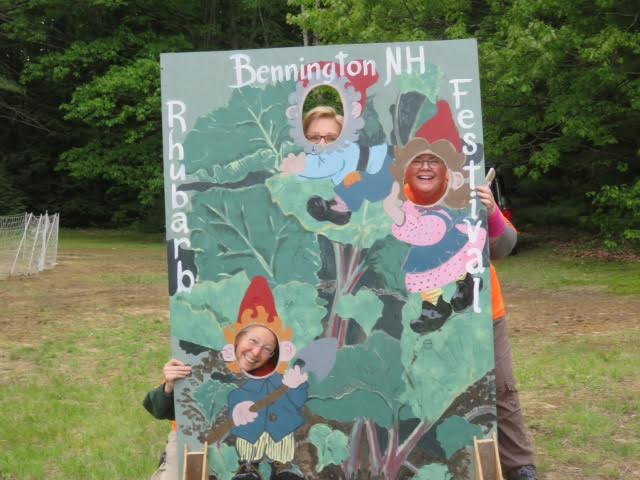
This is the blog of the Bennington Rhubarb Festival, started in 2013 to benefit the G.E.P. Dodge Library Building Fund.
If you would like to help the Building Fund, please contribute any amount to the G.E.P. Dodge Library Building Fund, Bennington, NH 03442.
The next blog installment will be posted on November 18, 2025. If you click the Follow button, all future posts will be sent straight to your inbox every month.
 benningtonnhRhubarbblog