June 1, 2024, will see the Bennington Rhubarb Festival in full swing at Sawyer Park, Bennington, New Hampshire. This year, the Library Trustees are running the Festival and many of the favorite elements of the event will be present: Pie and Bake Sale, Rhubarb Pie Contest, Rhubarb Store, Petting Zoo, Children’s Activity Tent, Story Walk, vendors, food, music, Rhubarb superlative contests, art contest, flower arrangements.
The Festival will open at 10 am and close at 3 pm at Sawyer Park, just off Route 202, behind ‘Harris’ Store’. Parking is free. Admission is free.
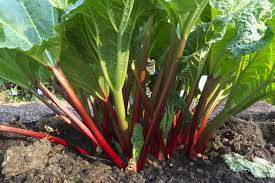
Can you see them — those pink leaf buds pushing up through the soil? This is the earliest that I can remember seeing new growth, a full three weeks before last year. [Don’t try to tell me that the climate isn’t changing!] Usually the Rhubarb Patch is covered by at least a foot of snow in mid-March, but we had a mild winter.
As the leaves unfurl and the stalks grow taller, it is time to watch for flower buds. It is good to locate those early. Why? I like to dig out the roots that are flowering, to thin out the bed. The roots that are removed are sold to benefit the Library Building Fund or moved to another part of the garden where they will have more room.
Can Rhubarb Pie be far behind? Yum.
This is the blog of the Bennington Rhubarb Festival. The Festival started in 2013 to benefit the G.E.P. Dodge Library Building Fund.
If you would like to help the Building Fund, please contribute any amount to the G.E.P. Dodge Library Building Fund, Bennington, NH 03442.
The next blog installment will be posted on April 9, 2024. If you click the Subscribe button, all future posts will be sent straight to your inbox every month.
Some families like to play games together during the holidays. But Monopoly takes forever and Scrabble is not for everybody. How about introducing Rhubarb Trivia to the fun? Print up this fact sheet and distribute it so people can study. Then hold a contest. Winner gets an extra helping of Rhubarb Pie or Rhubarb Pudding or Rhubarb Crumble Bars. At last year’s Rhubarb Festival, there was a Trivia Contest — get ready for Festival 2024!
How many species of rhubarb are there?
19
What is the coldest growth zone in which rhubarb will thrive?
Zone 2
What common grain shares a family with rhubarb?
Buckwheat
What is the Genus name of rhubarb?
Rheum
How tall can Rheum officinale [garden rhubarb] grow?
2 meters = 6.5 feet
How many calories in 2/3 cup of rhubarb?
20
What part of the rhubarb plant should you never eat?
leaves
What toxin is in rhubarb leaves?
Oxalic acid
Rhubarb is high in what vitamin?
Vitamin K1
What do you do to a rhubarb plant to be able to harvest it all summer long?
Cut off the flower stalks
How long can a rhubarb plant live?
60+ years
Which soil nutrient does rhubarb love the best?
Nitrogen
Where is the origin of rhubarb?
Central Asia.
Which ancient Asian civilization believed that the first humans grew from a rhubarb plant?
Persia
Which of these ancient civilizations used Rhubarb? Indus River or Mayan or Roman
Indus River
This is the blog of the Bennington Rhubarb Festival, which was started in 2013 to benefit the library Building Fund. If you would like to help the Building Fund, please contribute any amount to the G.E.P. Dodge Library Building Fund, Bennington, NH, 03442, USA.
The next installment of this blog will be posted on January 16, 2024. If you click the Follow button, all future posts will be sent straight to your inbox every month.
Rhubarb, Rheum rhabarbarum, originated in southern Siberia, on the border with Mongolia. Some say the name is of latin origin — yet the Greeks were using it for medicine before Roman times, and they called it rheon, which is related to a Persian word for the plant. The ‘barberum’ part of the name means ‘foreign.’
The Genus name ‘Rheum,’ comes from central Asia’s Rha River, named by the Scythians, now called the Volga River. The region has been inhabited for 9000 years, but at what point the inhabitants began to use Rhubarb or even how it arrived there from Siberia, we can only speculate. They must have grown a lot of rhubarb in the Volga floodplain, facilitated by the well-drained fluvial sediments with a high organic content. Thus, Rhubarb means ‘foreigner’s plant from the Rha River Valley.’
As long ago as 5000 years ago, the Chinese used the woody roots of Rheum palmatum for medicine: to relieve diarrhea, fevers, and constipation. [Constipation was a frequent problem in days past, due to the unavailability of fresh fruits and vegetables for months at a time.] Medicines that promoted bowel function were called ‘cathartic’ or ‘purgative.’
Along the Silk Road, formalized in 130 BCE, rhubarb roots were traded widely. Their laxative properties were in high demand and rhubarb roots were the major export of Asia for centuries — a very valuable commodity. Rhubarb in those days was not valued for the stalks, but for the roots only. Thus from the very early days, Rhubarb was a useful medicine and a valuable commodity.
This is the blog of the Bennington Rhubarb Festival, which was started in 2013 to benefit the library Building Fund. If you would like to help the Building Fund, please contribute any amount to the G.E.P. Dodge Library Building Fund, Bennington, NH, 03442, USA.
The next installment of this blog will be posted on November 21, 2023. If you click the Follow button, all future posts will be sent straight to your inbox every month.